
Deliverable 01
Drone System Concept
Students define the mission, market, use case, aircraft type, payload strategy, and operational value of their system.
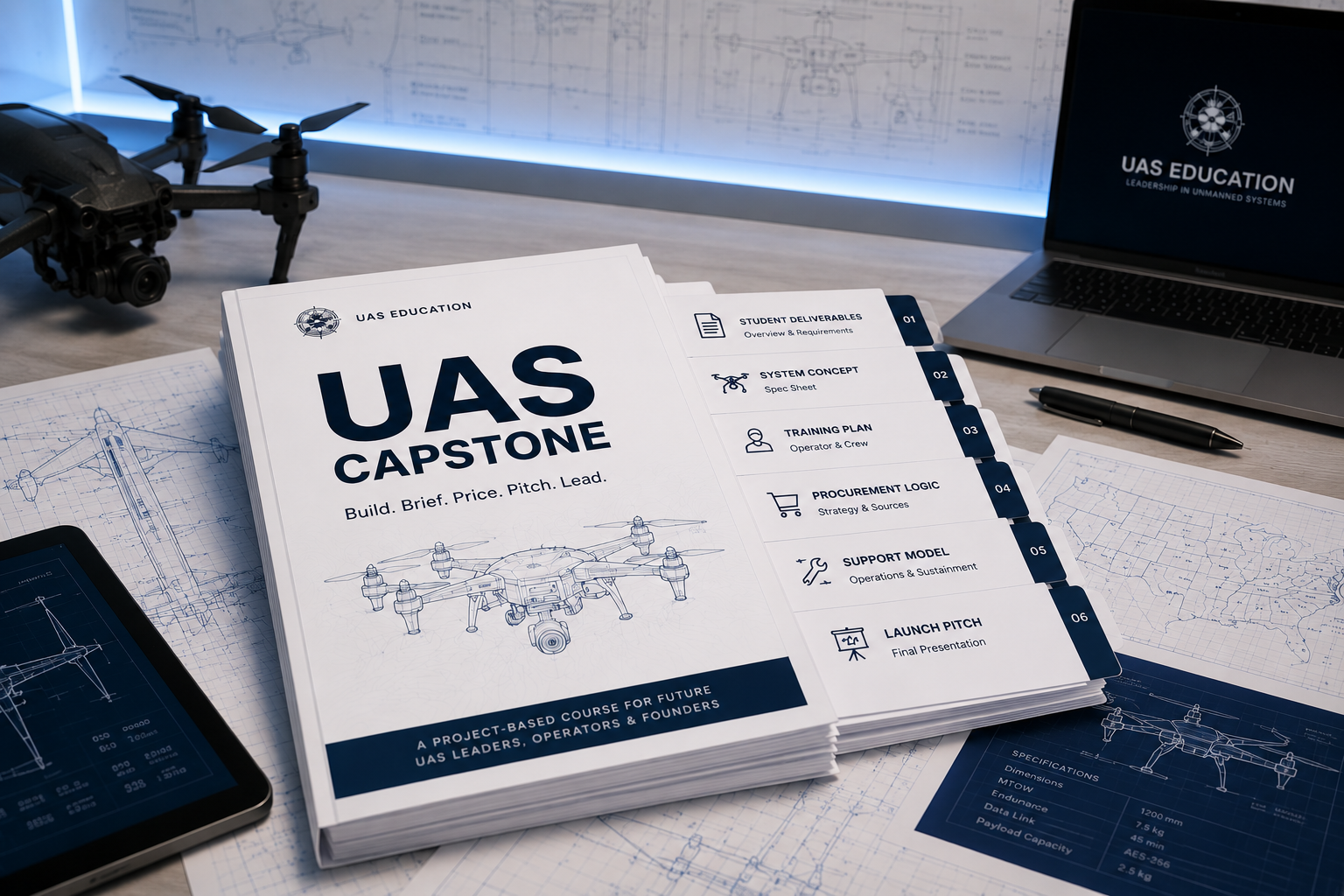
A project-based course for students who want to understand how modern drone systems, programs, and companies are actually built.
UAS Capstone moves beyond basic flight training. Students develop a complete drone system concept, create industry-style deliverables, think through real procurement and operational challenges, and present their final product as if they were launching it into the market.
Drones are no longer a side topic in aviation. They are part of public safety, defense, infrastructure, agriculture, emergency response, logistics, autonomy, and national strategy.
But many students are still trained as if the industry is only about aircraft control and certification. UAS Capstone fills the gap by teaching how drone products, programs, support models, pricing strategies, training plans, and customer-facing systems are actually built.
A hard multiple-choice challenge based on the type of thinking students develop in UAS Capstone. This is not a Part 107 quiz. It is designed to test judgment, strategy, procurement logic, and system-level thinking.
Students do not just study the industry. They build the materials and thinking behind a real UAS product, program, or company concept.
Students define the mission, market, use case, aircraft type, payload strategy, and operational value of their system.
Students create a professional spec sheet that explains capability, endurance, payload, communications, limitations, and mission fit.
Students think through product pricing, warranty options, training packages, care plans, and long-term customer support.
Students design a training pathway for end users, including beginner, advanced, and optional ecosystem integration tiers.
Students build a beginner-oriented user guide structure that makes the system easier to understand, train, and operate.
Students package the semester into a professional pitch deck and present their system as if launching to customers, investors, or procurement teams.
The page does not reveal the full course breakdown, but it shows the arc: students move from industry understanding to system design, documentation, pricing, and final presentation.
Students study real industry lessons, trusted specifications, platform decisions, and the difference between a flying aircraft and a viable UAS product.
Students select use cases, payloads, operational environments, user needs, ground control considerations, and ecosystem requirements.
Students think through training, pricing, warranty, documentation, RFP language, customer expectations, and program-level adoption.
Students refine their brand, messaging, pitch deck, launch story, and final deliverables into one cohesive professional presentation.
UAS Capstone is designed for students who need to think across technology, operations, business, regulation, training, customers, procurement, and leadership. The aircraft matters — but the ecosystem around the aircraft is what determines whether a drone product or program actually works.
UAS Capstone can support colleges, aviation programs, workforce development initiatives, and organizations looking to move beyond basic drone instruction into real UAS industry leadership.